ENCORE
Friday November 6, 2026 at 7:30 pm
CANCELLED due to performer illness
Friday November 6, 2026 at 7:30 pm
CANCELLED due to performer illness
Guelph Youth Music Centre Recital Hall
75 Cardigan Street, Guelph, ON
75 Cardigan Street, Guelph, ON
REPEAT PERFORMANCE
Saturday November 7, 2026 at 3:30 pm
CANCELLED due to performer illness
Saturday November 7, 2026 at 3:30 pm
CANCELLED due to performer illness
Grace United Church
140 Bruce St South, Thornbury (Blue Mountain), ON
140 Bruce St South, Thornbury (Blue Mountain), ON
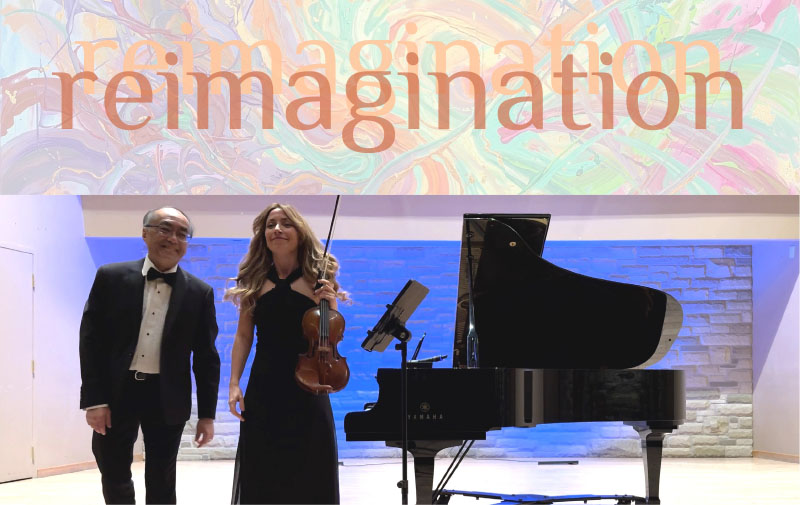
Sadie Fields violin & Ken Gee piano
Tartini Violin Sonata in G minor, Op. 1, No. 10, Didone abbandonata (Dido Abandoned)
de Falla Suite Populaire
Kreisler Three Old Viennese Dances (Liebesfreud; Liebesleid; Schön Rosmarin)
Vitali Chaconne
Schnittke Suite in the Old Style
Vaughan Williams The Lark Ascending
de Falla Suite Populaire
Kreisler Three Old Viennese Dances (Liebesfreud; Liebesleid; Schön Rosmarin)
Vitali Chaconne
Schnittke Suite in the Old Style
Vaughan Williams The Lark Ascending
In 1935, the violinist Fritz Kreisler admitted something he’d hidden for decades: several “long-lost” Baroque pieces he’d been performing, including this concert’s Three Old Viennese Dances, were his own invention all along. His response to the outcry: “The name changes, the value remains.”
That question — what changes when we look back and remake something — runs through the whole programme. De Falla turns Spanish folksong into the concert hall; Tartini channels operatic tragedy into the violin; Vitali’s modest original becomes Romantic grandeur in Ferdinand David's hands; Schnittke plays knowingly with Baroque forms two centuries later.
The programme closes with Vaughan Williams’s The Lark Ascending, no longer reimagining a style, but a poem, rising above everything that came before it.